
Horse Wormer (Dewormer) Dose Calculator
Paste wormers (called dewormers in the US) are dosed by bodyweight, and guessing too low is one of the main reasons worms become resistant to treatment. Getting the dose right matters.
Enter your horse’s weight and the details printed on your wormer syringe, and this free wormer dose calculator will tell you which marking to set the dial to.
Wormer Dose Calculator
Find the right dial setting for your paste wormer
How to worm your horse with the right dose
Most horse wormers come as an oral paste in a syringe with a dial or locking ring on the plunger. The plunger is marked in bodyweight steps, and you set the ring to your horse’s weight so the syringe only gives that amount. If the weight is guessed too low, the horse gets less than it needs. That can leave some worms alive, and over time it helps them become resistant to the drug.
Step 1: Get an accurate weight
Studies regularly show that owners underestimate their horse’s weight by eye. A weighbridge is best, but measuring the heart girth and body length and using our horse weight calculator is far more reliable than guessing. Weigh again before each dose, because weight changes through the year.
Step 2: Read the syringe
Check two things on the packaging or the syringe itself:
- How much one syringe treats. In the UK many syringes treat up to 600kg or 700kg, and in the US one tube commonly treats up to 1,250lb, but this varies between products.
- The gap between the markings. Many plungers are marked every 50kg or 100kg, or every 250lb in the US.
Enter both into the calculator above. It rounds your horse’s weight up to the next marking, which is the usual advice, and tells you if a large horse needs more than one syringe.
Step 3: Give the dose properly
- Make sure the horse’s mouth is empty of food, so the paste isn’t spat out with a mouthful of hay.
- Slide the nozzle in at the corner of the mouth, in the gap between the front and back teeth, and push the paste onto the back of the tongue.
- Hold the head up gently for a few seconds and watch that it is swallowed.
- Record the date, product and weight used, so you know when the next test or dose is due.
Worm less, but worm smarter
Resistance to wormers is a growing problem, so most vets now advise targeted worming rather than dosing every horse on a fixed calendar. That usually means:
- Faecal worm egg counts (FWEC, called fecal egg counts or FEC in the US) during the grazing season, so you only treat horses that are carrying a significant burden of redworm.
- Tapeworm testing with a saliva or blood test, usually once or twice a year.
- A winter treatment for encysted small redworm, which egg counts can’t detect. Your vet (or SQP in the UK) can advise whether your horse needs it.
- Good pasture hygiene, such as picking up droppings at least twice a week, not overstocking fields and resting or cross-grazing paddocks.
In the UK, most horse wormers are prescription medicines (POM-VPS), so they are supplied by a vet, pharmacist or a Suitably Qualified Person (SQP), who can help you choose the right product.
In the US, most horse dewormers are sold over the counter at feed and tack stores. The American Association of Equine Practitioners (AAEP) parasite control guidelines recommend the same targeted approach, based on fecal egg counts, so it’s worth asking your vet to plan a deworming program for your horse.
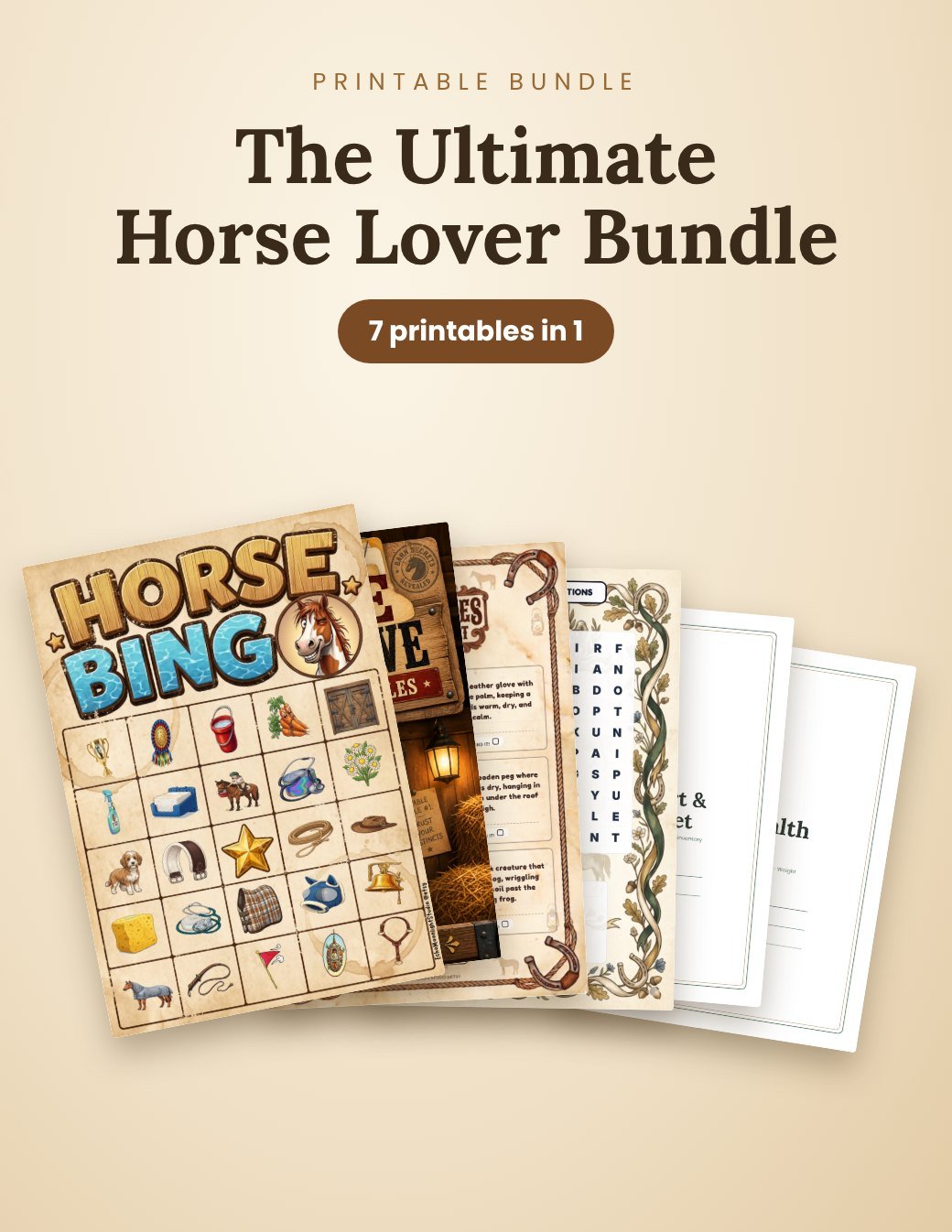
The Ultimate Horse Lover Bundle
Record worming, faecal egg counts, vaccinations, vet and farrier visits in the Horse Health Record. It comes in the Ultimate Horse Lover Bundle with a Feeding Chart set and 5 horse games, $12.99.
Frequently asked questions
Should I round my horse’s weight up or down?
Up, to the next marking on the syringe. Underdosing is a major cause of wormer resistance. Don’t add large extra amounts beyond the label dose, though. Follow the packaging and ask your vet (or SQP in the UK) if you’re unsure.
What if my horse weighs more than one syringe treats?
You’ll need a full syringe plus part of a second one. The calculator shows you exactly where to set the second syringe.
Is it safe to give a whole syringe to a small pony?
No. Always set the dial to the pony’s weight. Some products, especially those containing moxidectin, have a narrow safety margin, so overdosing small ponies, foals, miniatures and thin or elderly horses can be dangerous.
How often should I worm my horse?
That depends on your horse’s egg count results, age, grazing and the time of year. A worming plan from your vet (or SQP in the UK), based on testing, is better than a fixed schedule for most horses.
This calculator gives general guidance only. Always read the product instructions and speak to your vet (or SQP in the UK) before worming, especially for foals, small ponies, pregnant mares or horses in poor health.
🐴 Looking For More Free Equestrian Tools?
We’ve built a whole collection of tools just for horse lovers! Whether you need to figure out your horse’s winter blanket size or calculate your winter hay budget, we’ve got you covered.
Explore All Free Tools