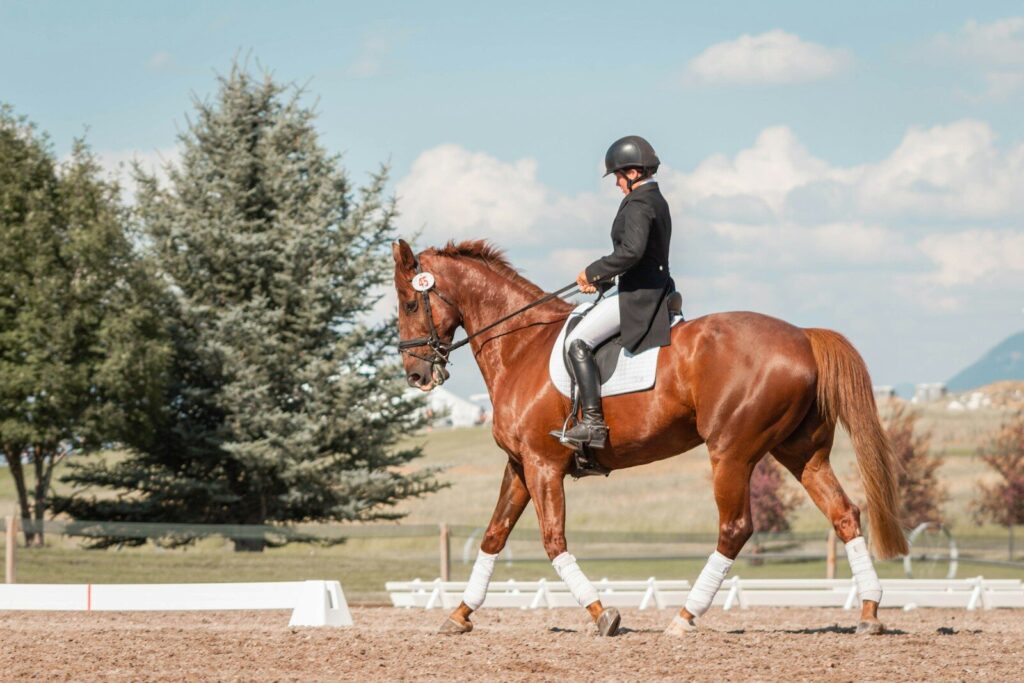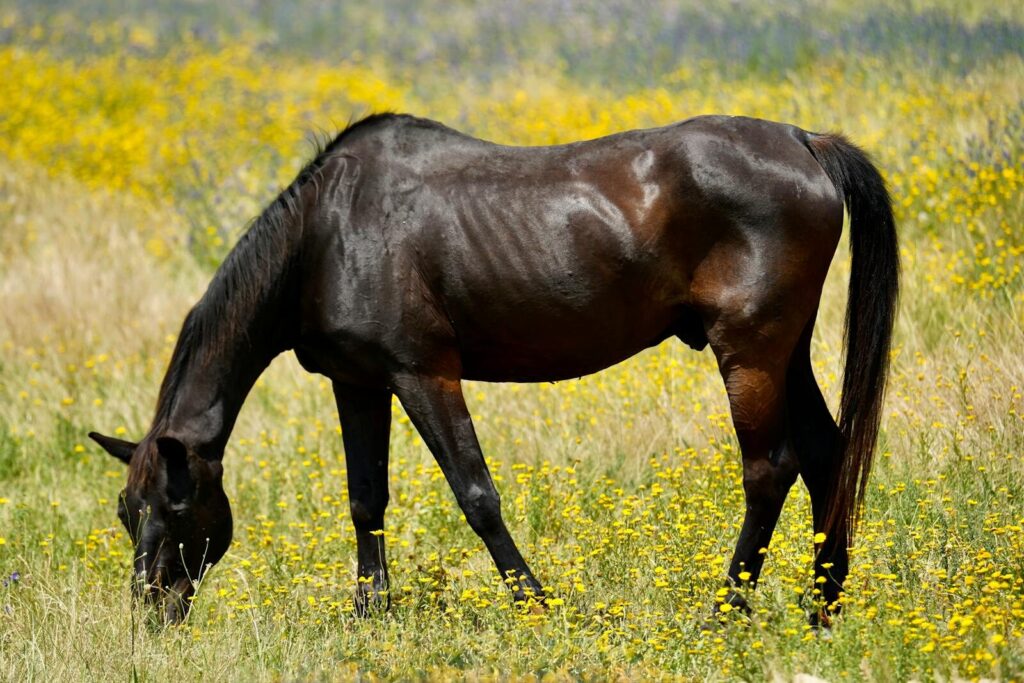
Horses are designed to eat little and often, grazing for most of the day. Slow feeders, such as small-hole haynets, hay balls and grid feeders, make hay last longer and help bring a horse’s eating pattern closer to grazing.
Why slow feeding helps
- Longer eating time: a restricted ration lasts longer, so there are fewer long gaps without fibre.
- Gut health: horses produce stomach acid continuously, and chewing forage produces saliva that helps buffer it. Long gaps without food are linked to gastric ulcers.
- Weight management: good doers can stay busy on a smaller, weighed ration.
- Less waste: less hay is pulled out and trampled into the bed.
- Fewer boredom behaviours in stabled horses.
Types of slow feeder
- Small-hole haynets: cheap and easy. Start with medium holes and reduce the size gradually.
- Hay balls and toys: good for paddocks, but check they can’t be rolled into fences.
- Grid or tub feeders: let horses eat with their head down, a more natural position.
- Timed or trickle feeders: useful for horses on strict diets.
Using them safely
- Hang haynets high enough that a horse can’t catch a foot or shoe in an empty net, but not so high that hay seeds fall into its eyes.
- Introduce a slow feeder gradually, and offer some loose hay at first so the horse doesn’t get frustrated.
- Check teeth and incisors regularly if your horse uses a metal grid.
- Don’t use a slow feeder to cut the ration too far: forage should usually stay at no less than about 1.5% of bodyweight.
Work out the right amount with our hay calculator, and read more about managing weight in our guide to safe weight loss for ponies.
Frequently asked questions
Do slow feeders cause frustration?
Some horses get frustrated at first. Start with larger holes or some loose hay alongside, and reduce gradually.
Unlock Your Free Equine Care Toolkit
Take the guesswork out of feeding and weight management.
What hole size should a slow-feed haynet have?
Small-hole nets are often around 2 to 3cm. Start larger and go smaller once your horse is used to it.
Can slow feeders help with ulcers?
By reducing long gaps without forage, slow feeders support the management advice vets give for ulcer-prone horses. They are not a treatment, so speak to your vet if you suspect ulcers.
This guide is general information for horse owners, not veterinary advice. If you are worried about your horse, speak to your vet.