
Horse Body Condition Score Checker (1 to 9 Scale)
Weight on its own doesn’t tell you whether a horse is too fat or too thin. A body condition score does. It’s what vets use to judge how much fat a horse is carrying.
Use this free body condition score checker to score your horse area by area on the 1 to 9 Henneke scale, used by vets in the US and UK, and see a picture of what that score looks like.
Body Condition Score Checker
Look at and feel each area, then choose the closest description
What body condition scores look like
These illustrations show the same horse at five points on the scale. Real horses vary with breed and build, so always feel as well as look, especially under a thick winter coat.
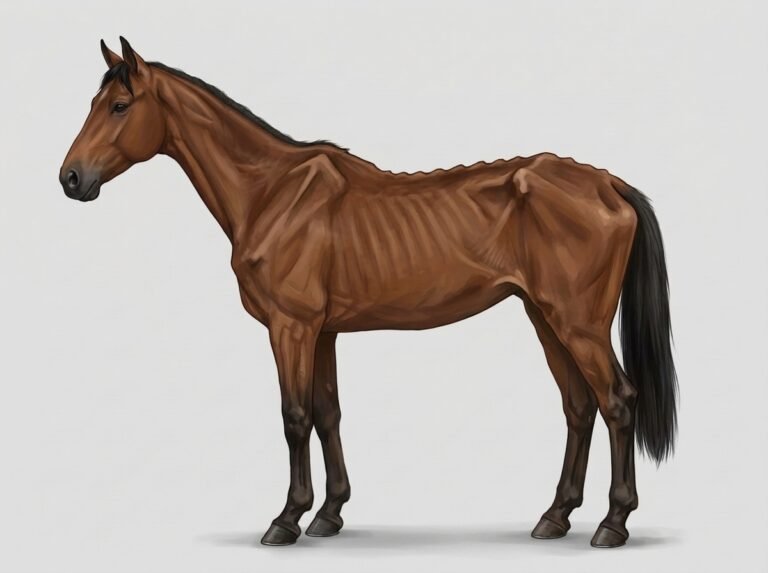
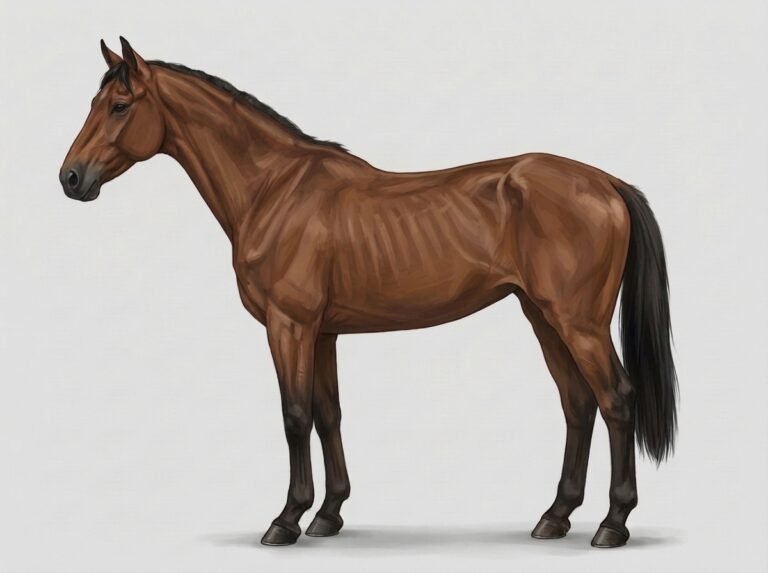
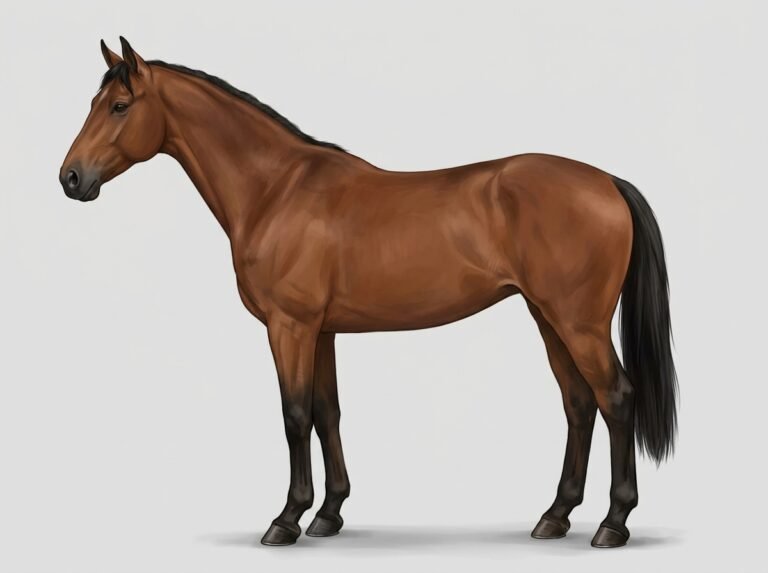
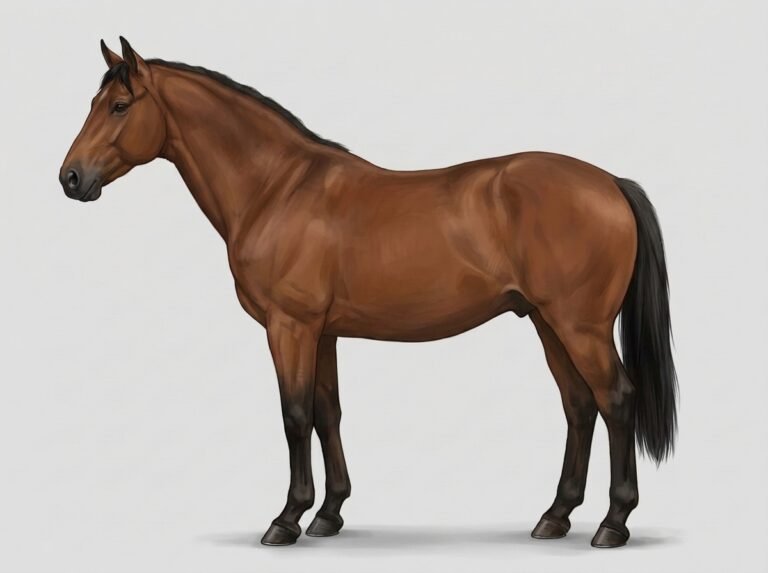
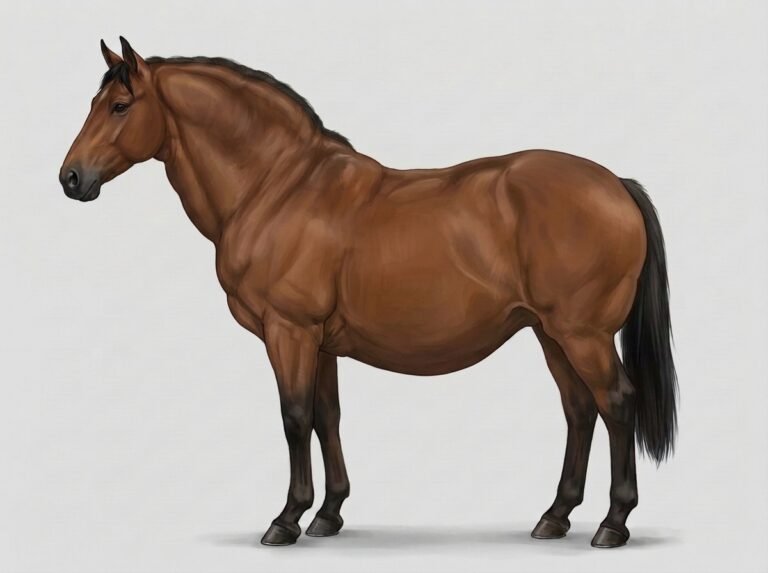
The Henneke body condition scale
The 1 to 9 scale was developed by Dr Don Henneke and colleagues in 1983. It is the most widely used system in the US and is also common in the UK. It scores fat cover over six areas: the neck, withers, shoulder, ribs, back (loin) and tailhead.
| Score | What you’ll see and feel |
|---|---|
| 1: Poor | Extremely emaciated. Spine, ribs, tailhead and hip bones stick out sharply. Bones of the withers, shoulder and neck are easy to see. No fat can be felt anywhere. |
| 2: Very thin | Emaciated. Slight fat over the base of the spine, but the spine, ribs, tailhead and hips are still prominent. Withers, shoulder and neck look bony. |
| 3: Thin | A slight ridge along the spine. The ribs are faintly visible. The tailhead is prominent and the hip bones can be seen but look rounded. Neck, withers and shoulder look lean. |
| 4: Moderately thin | A slight ridge along the back. A faint outline of the ribs can be seen. Some fat can be felt around the tailhead. Neck, withers and shoulder aren’t obviously thin. |
| 5: Moderate (ideal) | The back is level. Ribs can’t be seen but are easy to feel. Fat around the tailhead feels spongy. The withers are rounded and the neck and shoulder blend smoothly into the body. |
| 6: Moderately fleshy | There may be a slight crease down the back. Fat over the ribs feels spongy and fat around the tailhead feels soft. Small fat deposits along the neck and behind the shoulder. |
| 7: Fleshy | A crease down the back may be visible. Individual ribs can still be felt, but with noticeable fat between them. Fat is building up along the neck, withers and behind the shoulder. |
| 8: Fat | A clear crease down the back. The ribs are difficult to feel. Fat around the tailhead is very soft, the neck is noticeably thick and fat has built up on the inner thighs. |
| 9: Extremely fat | An obvious deep crease down the back. Patchy fat over the ribs, and bulging fat around the tailhead, along the neck, behind the shoulder and over the withers. The flank is filled in and the inner thighs may rub together. |
Most horses should sit between 4 and 6, with 5 as the ideal for most. Some performance horses may be kept nearer 4 and some broodmares nearer 6, but scores of 7 and above raise the risk of laminitis and equine metabolic syndrome (EMS).
UK 0 to 5 scale: some UK vets and charities use a 0 to 5 scale instead, where 0 is very poor, 3 is good and 5 is very fat. As a rough guide, a 5 on the Henneke scale is about a 3 on the 0 to 5 scale.
How to body condition score your horse
- Use your hands as well as your eyes. A winter coat, rugs and muscle can all hide fat or bone. Run the flat of your hand firmly along the neck, behind the shoulder, over the ribs, along the back and around the tailhead.
- Score each area separately. Horses often carry fat unevenly. A cob may have a fat crest but ribs you can feel easily, so scoring each area and averaging gives a fairer result.
- Stand back too. Look from the side and from behind, with the horse standing square on level ground.
- Check regularly. Score every two to four weeks and write it down alongside a weight from our horse weight calculator. Small changes are much easier to spot over time.
- Ask for a second opinion. Your vet can score your horse at its annual check-up, which helps you calibrate your own scoring.

The Ultimate Horse Lover Bundle
Log weight, body condition scores and health checks all year in the Horse Health Record, part of the Ultimate Horse Lover Bundle with a Feeding Chart set and 5 horse games. Instant download, $12.99.
Frequently asked questions
What is a good body condition score for a horse?
For most horses, 5 out of 9 is ideal. Anything from 4 to 6 is generally acceptable, depending on the horse’s type, work and the time of year.
My horse scored 7 or more. What should I do?
Speak to your vet, especially if your horse is a good doer or has had laminitis before. Our weight loss planner can help you set a safe target and timeline.
My horse is thin. How do I help them gain weight?
First, rule out health problems with your vet, including teeth, worms and other illness. Then build up the ration gradually. Our feed calculator shows how much energy your horse needs and whether hay alone can provide it.
Can a horse be fat but have ribs showing?
Yes. Some horses, especially older horses or those with PPID (Cushing’s), can lose muscle along the back while carrying fat on the neck and tailhead. That’s why scoring each area separately matters.
This checker gives an estimate only and is not a substitute for an assessment by your vet. The illustrations are AI-generated guides and may not show every feature of each score exactly.
Horse Health Record Book
Log weight and condition scores, vet visits, worming, vaccinations, farrier and dentist appointments, feeding and exercise for a whole year. A 100-page printable in US Letter and A4.
🐴 Looking For More Free Equestrian Tools?
We’ve built a whole collection of tools just for horse lovers! Whether you need to figure out your horse’s winter blanket size or calculate your winter hay budget, we’ve got you covered.
Explore All Free Tools